
The Private Office Blog

Voting with their feet. By Consilium.
Are New Zealanders really leaving in record numbers? A closer look at the migration data reveals a more reassuring story than recent headlines might suggest.
Why talking about money with the people closest to us can be difficult. Podcast by Smart Money featuring Nick Crawford, The Private Office.
Money can be one of the hardest subjects for couples and families to discuss. Nick Crawford, Manging Director at The Private Office, talks with Newstalk ZB's Tim Beveridge about breaking the taboo and finding better ways to start the conversation.

Lessons from 100 years of capitalism. By Consilium.
A century of market history teaches a clear, pragmatic lesson: you don't have to predict which companies will become tomorrow's winners. What matters is having an investment approach that positions you to benefit when those winners emerge.

No Secret Recipe for Successful Investing. By Consilium.
There's no secret recipe for successful investing. Learn why staying disciplined through changing market conditions can be one of the most important decisions an investor makes.
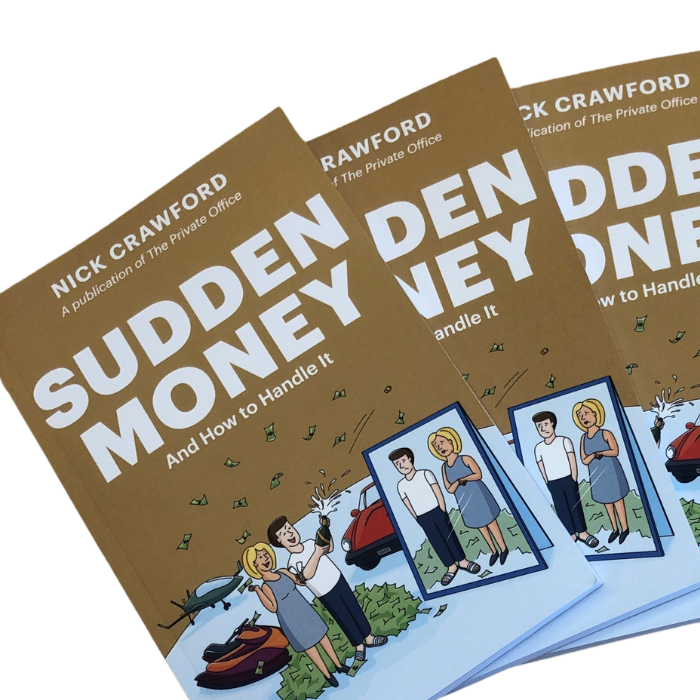
Sudden Wealth Done Right. By Nick Crawford, The Private Office.
Coming into a large sum of money can be exciting, but it also brings important decisions. Learn why taking time to pause, plan, and seek trusted advice can help you make the most of a financial windfall.

The value of building financial flexibility. By David Booth, Dimensional.
The best financial plans aren't always built around one fixed outcome. Discover why saving for flexibility, rather than certainty, can help you adapt to life's changing opportunities and achieve what matters most over the long term.

Why Couples Struggle to Talk About Money. By Nick Crawford, The Private Office.
Why do so many couples struggle to talk about money? Nick Crawford explores how our experiences and values shape our relationship with money, and why focusing on shared goals can help couples find common ground.

Uncertainty is how you grow wealth. By Dimensional.
Uncertainty is often viewed as a threat to investors, but it is actually a key reason why long-term investment returns exist. Rather than fearing market volatility, successful investors learn to embrace uncertainty as part of the journey to building wealth.

The case for a strategic allocation to New Zealand shares. By Consilium.
Recent underperformance hasn’t changed the long-term case for New Zealand shares. For local investors, they continue to offer valuable diversification, tax advantages, and alignment with future spending needs.

Investing like it’s 1996. By Consilium.
What if you knew in advance that the next 30 years would include financial crises, wars, pandemics, and extreme market volatility?
How might a thoughtful investor have incorporated that information into their 30-year investment strategy in 1996?

Zoom out, not in. By Consilium.
Periods of market volatility can feel uncomfortable, but history shows that short-term disruptions are a normal part of investing.
This article highlights the importance of taking a long-term view and remaining focused on disciplined, diversified investing through changing market conditions.

1970’s revisited? By Consilium.
Recent oil price increases have drawn comparisons to the 1970s oil shock, but the scale and impact are far less severe.
This article discusses that unlike the prolonged stagflation and deep market declines of that era, the current rise appears to be a shorter-term, cyclical disruption, with markets already showing signs of recovery.

Geopolitical Risk. By Dimensional.
Geopolitical conflict can be unsettling, but it rarely justifies changing a long-term investment strategy.
This article discusses how staying invested, rather than reacting to short-term events, is typically the better approach.

5 questions to ask financial advisors before hiring them. By Dimensional.
Choosing the right financial adviser starts with asking the right questions.
This article highlights five key questions to help you find a trusted partner aligned with your goals and long-term success.

The mistakes people make with a windfall. Podcast by Smart Money featuring Nick Crawford.
We've all found ourselves day dreaming about where we'd spend a big Lotto win at one point or another.
Realistically, many of us will come into a major windfall - but it's likely to come in the form of a bonus at work, or an inheritance.
Is it okay to buy a new car and go on holiday? Or should we invest it all?

A look back at when the world feared the worst. By Consilium.
Geopolitical conflicts often trigger sharp market reactions and alarming headlines, but history shows these shocks are usually temporary. From the Gulf War to more recent Middle East tensions, markets have consistently recovered and continued their long-term growth.

Is now the right time to invest? By Consilium.
While short-term movements are unpredictable, markets have tended to rise over time. And the real risk often isn’t investing at the “wrong” moment - it’s waiting for the perfect one and missing out altogether.

Do women make better investors?
It’s a bold question, but overseas research suggests the answer might surprise you.
As women increasingly control wealth and make major financial decisions, it’s worth unpacking what drives these results, the challenges women still face, and how the right advice can help close the wealth gap.

Money, Happiness & What 2026 Could Do Better.
You’ve probably heard the saying, “money can’t buy happiness.” But for most of us it achieves something almost as valuable: it buys peace of mind. What money doesn’t automatically provide though is fulfilment.
Find out the top 3 ways money probably didn't make you happy in 2025... and the 3 ways it might in 2026.

Does Gold Hedge Economic Downturns?
Some people buy gold thinking it will protect their portfolio in tough times, but the evidence doesn’t really support this. Gold is quite volatile, and it hasn’t consistently gone up when the economy slows. In many downturns, high-quality bonds have provided similar — or even better — protection.
So if your portfolio already includes good fixed income, adding gold doesn’t necessarily make it safer.